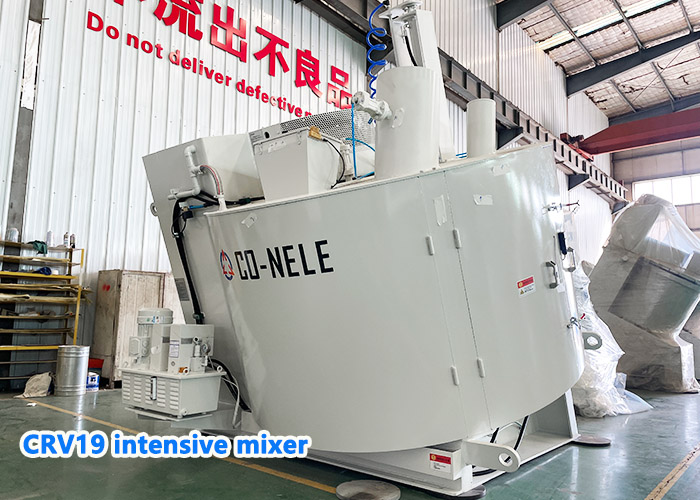
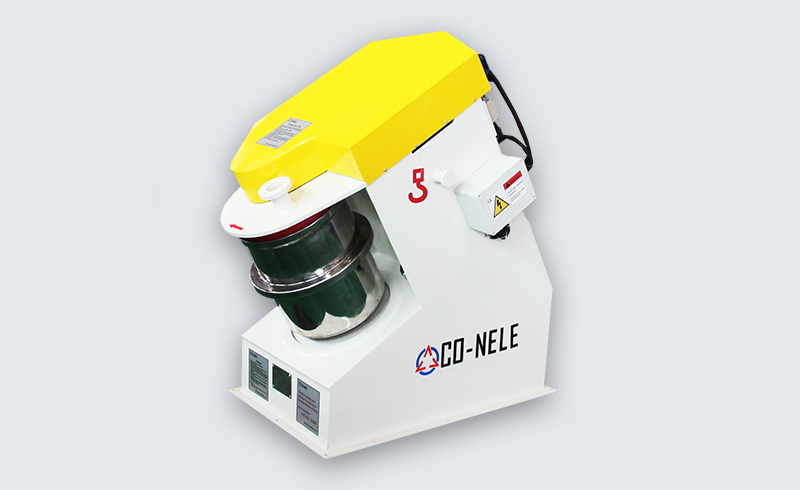
co-nele intensive mixer

Intensive Mixer for Lithium-Ion Battery Materials: Mixing, Dispersion and Granulation

2026.9.16  |  CO-NELE
As lithium-ion battery technology develops toward higher energy density and more efficient manufacturing, the preparation of electrode materials requires increasingly precise mixing and processing.
Battery formulations may contain active materials, conductive additives, binders, and other functional components. These materials can have significantly different particle sizes, flow properties, and agglomeration characteristics.

An intensive mixer for lithium-ion battery materials can provide the mechanical energy required for efficient mixing, dispersion, homogenization, kneading, granulation, and coating.
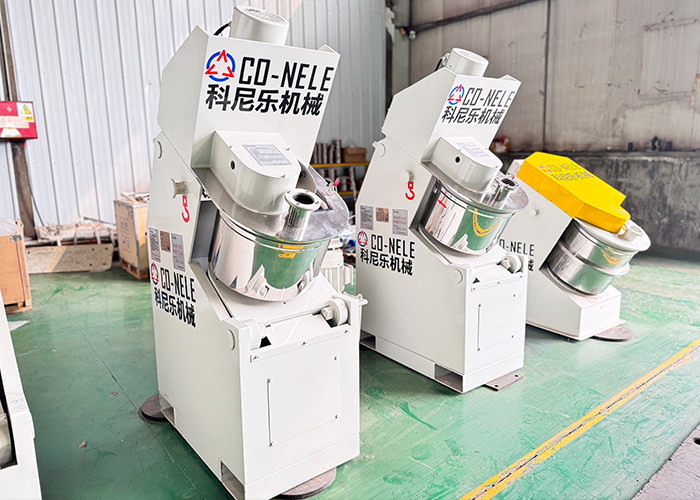
Intensive Mixer for Lithium-Ion Battery Materials: Mixing, Dispersion and Granulation

Intensive Mixer for Lithium-Ion Battery Materials: Mixing, Dispersion and Granulation

Why Use an Intensive Mixer for Battery Materials?
Conventional powder mixing is suitable for basic blending, but some battery materials require stronger mechanical action.
Fine conductive additives and binders can form agglomerates or distribute unevenly within active materials. An intensive mixer can promote more effective material circulation and particle interaction, helping achieve a more uniform mixture.
Depending on the formulation, intensive mixing can support:
- Powder homogenization
- Deagglomeration
- Conductive additive dispersion
- Binder distribution
- Kneading
- Granulation
- Particle coating
- High-solids mixing
The objective is not simply to maximize mixing intensity, but to provide the appropriate mechanical energy for the specific material and process.
Mixing and Dispersion of Electrode Materials
A typical electrode formulation may include:
Active Material + Conductive Additive + Binder + Processing Medium
During mixing, the individual components need to be distributed as uniformly as possible.
Conductive additives such as carbon-based materials are particularly important because their fine particles can form agglomerates. Effective dispersion helps distribute these additives throughout the active material and supports the formation of a more consistent conductive network.
An intensive mixer can provide strong mechanical interaction to improve:
- Additive distribution
- Agglomerate breakdown
- Material homogeneity
- Binder incorporation

The actual mixing conditions depend on particle size, formulation, additive concentration, material loading, mixing time, and temperature.
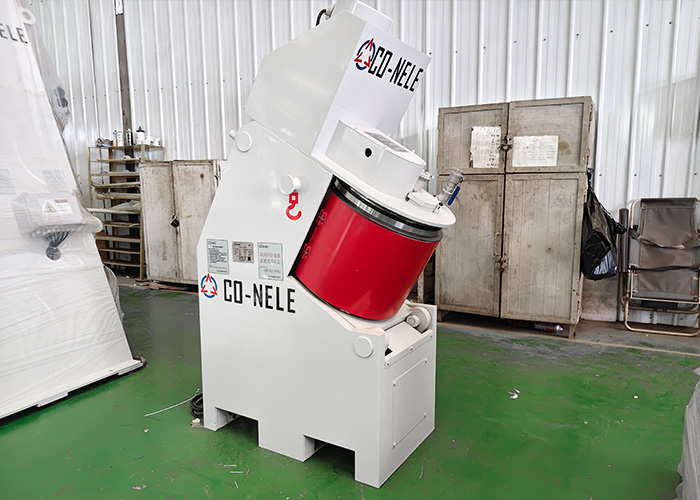
lithium-ion battery mixer

lithium-ion battery mixer

Intensive Mixing for Dry Electrode Materials
Dry electrode manufacturing is attracting increasing attention as battery manufacturers explore solvent-reduced or solvent-free production processes.
In dry mixing, active materials, conductive additives, and dry binders must be processed into a uniform and suitable material structure.
The process may involve:
Dry Mixing → Homogenization → Additive Dispersion → Binder Processing → Structured Dry Mix
Because dry-electrode formulations can be highly sensitive to binder type and mechanical energy, process parameters should be established through material testing.
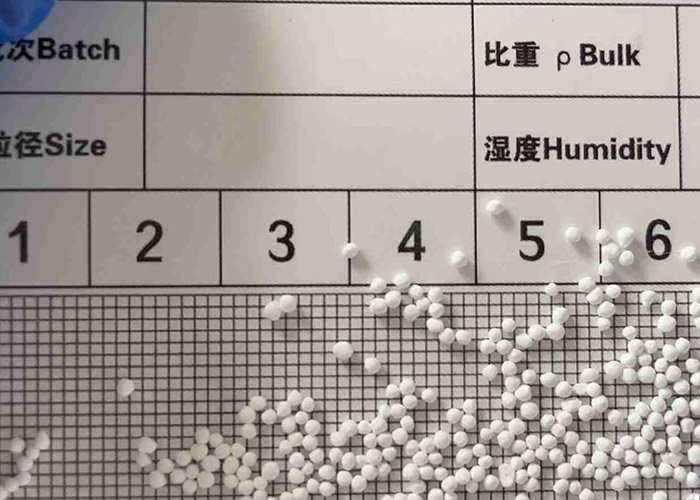
Granulation of Battery Materials
Intensive mixing can also be used for controlled granulation.
Granulation converts fine powders into larger, more manageable particles and can improve:
- Powder flowability
- Feeding behavior
- Bulk density
- Dust control
- Material handling
When mixing and granulation are combined in one process, the mixer can provide both component homogenization and controlled agglomeration.
The target granule size and structure depend on the material formulation and downstream production requirements.
Particle Coating and Functionalization
For some advanced materials, mixing is also used to distribute functional additives onto particle surfaces.
Intensive mechanical interaction can improve contact between particles and coating materials, supporting more uniform surface treatment or functionalization.
The appropriate process depends on the material chemistry, particle characteristics, additive type, and desired surface properties.
Temperature Control
Temperature can become an important process parameter during intensive mixing, particularly when processing high-solids materials or cohesive formulations.
Depending on the application, heating or cooling may be required to maintain stable material conditions.
Important factors include:
- Mixing energy
- Material temperature
- Processing time
- Binder characteristics
- Solids content

A suitable mixer configuration can therefore be selected according to the required thermal and process conditions.
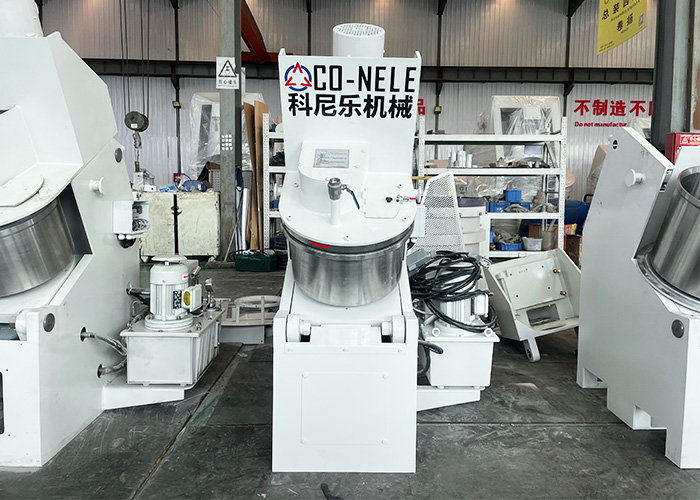
battery material intensive mixer

battery material-intensive mixer

CO-NELE CR & CRV Series Intensive Mixers
The CO-NELE CR and CRV series intensive mixers are designed for demanding material-processing applications requiring intensive mixing and homogenization.
Depending on the material and process, they can be applied to:
Mixing → Dispersion → Kneading → Granulation → Coating
Potential battery-related applications include the processing of:
- Cathode materials
- Anode materials
- Conductive additives
- Binder-containing formulations
- Dry electrode compounds
- Other advanced battery material mixtures
The appropriate mixer configuration depends on the specific material and process requirements.
Key selection factors include:
- Material properties
- Particle size
- Bulk density
- Batch capacity
- Required mixing intensity
- Mixing time
- Temperature control
- Wear resistance
- Discharge requirements
For new battery material applications, laboratory or pilot testing is recommended before selecting production-scale equipment.
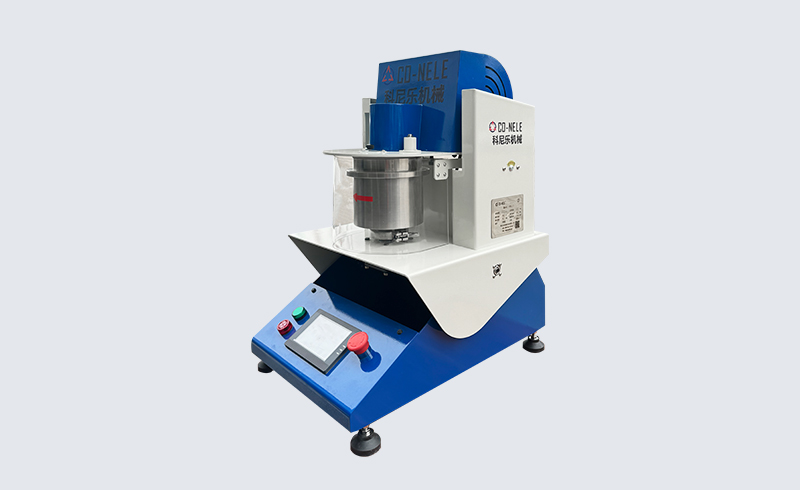
From Laboratory Testing to Industrial Production
Battery materials can behave differently even when their compositions appear similar. Laboratory testing can therefore help determine the appropriate mixing conditions before industrial production.
A typical development route is:
Material Testing → Laboratory Mixing → Process Optimization → Scale-Up → Industrial Production
Testing can help establish mixing time, energy input, material loading, temperature behavior, discharge characteristics, and final material quality.
This process-oriented approach allows the mixer configuration to be matched to the actual material rather than relying only on nominal mixer capacity.
An intensive mixer for lithium-ion battery materials can support more than basic powder blending.
Depending on the formulation and process, intensive mixing technology can provide:
- Homogenization
- Conductive additive dispersion
- Deagglomeration
- Binder incorporation
- Kneading
- Granulation
- Coating and functionalization
For battery manufacturers and material developers, the key is to match the mixing technology and process parameters to the specific material and production requirements.
CO-NELE CR and CRV series intensive mixers provide a flexible platform for evaluating demanding battery material mixing applications, with equipment configurations developed according to material characteristics, processing requirements, and production capacity.
Frequently Asked Questions
1. What is an intensive mixer for lithium-ion battery materials?
An intensive mixer is designed to provide strong mechanical mixing for applications requiring homogenization, dispersion, deagglomeration, kneading, granulation, or coating.
2. Can intensive mixers be used for dry electrode materials?
Yes. Intensive mixing can be evaluated for dry electrode formulations involving active materials, conductive additives, and dry binders. The appropriate process depends on the formulation and binder system.
3. Can intensive mixers process cathode and anode materials?
They can be considered for various cathode and anode material formulations. Actual equipment suitability should be verified through material testing.
4. What is the advantage of intensive mixing for conductive additives?
Intensive mechanical action can help break down agglomerates and distribute fine conductive additives more uniformly throughout the active material.
5. How do I select an intensive mixer for battery materials?
Selection should consider material properties, formulation, particle size, bulk density, required mixing intensity, batch size, temperature requirements, and production capacity. Laboratory testing is recommended for new applications.
Back To The List  

Related News

2026.9.8

CR20 Intensive Mixers for Covering Flux (CO‑NELE)

The CR20 granulators are inclined batch‑type intensive mixers, developed for metallurgical covering flux, casting powder and ladle covering agent.

2026.9.1

Intensive Mixer for Refractory Materials | CO-NELE

CO-NELE intensive mixer for refractory materials provides high-intensity mixing for magnesia, alumina, silicon carbide, mullite and refractory formulations, delivering uniform mixing and efficient production.

2026.8.18

Metal Powder Granulator: Integrated Mixing and Granulation for Higher Efficiency

The CO-NELE metal powder granulator features an integrated mixing and granulation design that utilizes 3D turbulent flow technology to consolidate processing steps, resulting in a significant boost in efficiency and guaranteed product quality.

Related Products

conele concrete mixer

After Sales Contact

The Pioneer Of China's Concrete Mixer
Equipment.

E-mail:mixer@co-nele.com
conele concrete mixer

After Sales Support

Our after-sales service is at your disposal for all
questions

Tel:0086-15253277366
conele concrete mixer

CO-NELE

Houguzhencun Xiazhuangjiedao Chengyang Dist
Qingdao City China

Show on the Map

GET YOUR FREE QUOTE

We will contact you within 24 hours.

X